
Production
– Discrete manufacturing, process manufacturing or a combination of both?
– Increase customer satisfaction by responding quickly to questions and requests with accurate product costing and pricing.
– Optimize your processes through real-time control of work in the manufacturing flow and deeper insight into production costs.
– Ensure products meet or exceed your customers’ high expectations for products, delivery and aftermarket services.
– Manage customer care, warranties and service orders as part of your core processes and improve traceability.
– Manufacturing increasingly takes place through subsidiaries that supply the market via a network of sister companies, sales companies or partners
Industry challenges
Manufacturing companies face familiar challenges: increased global competition, environmental and legislative pressures, rapid technological change and fluctuating economic markets. Although the US and European economies are growing slowly, growth is dramatic, particularly in Asia, but also in Latin America and Africa. Manufacturers must quickly adapt to these emerging economies and the corresponding market dynamics they bring into supply chains and sales channels. Manufacturing and production companies must not only tackle these challenges head-on, but also work out how to do so while retaining the valuable, highly educated employees essential to bringing new and innovative products and services to market.
Even the best responses to industry challenges can be held back by rigid ERP solutions. Synchronizing multiple companies and sites across geographical locations to adapt process workflows is either expensive or impossible with most ERP software. Growing and changing manufacturers need an ERP system that lets them automate and streamline their unique way of competing in an increasingly complex world. They need an ERP system built from the ground up on the understanding that every company is different and constantly changing.
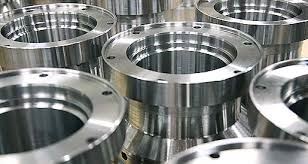
Powerful manufacturing features in Sage X3
Reach the market quickly by managing all your manufacturing processes in one complete system. Sage X3 supports planning, scheduling and production control activities for both process and discrete manufacturing. It is also flexible enough to adapt to unique or mixed manufacturing methods.
– Production management of work orders, customer orders and inventory counts
– Automated capacity planning
– Comprehensive batch, sub-batch and serial number traceability
– Flexible production control and planning
– Bill-of-materials management with revisions and validity dates
– Product configurator, options and variants
– Flexible costing and pricing methods
Read more about Sage X3 here
Key features in Jeeves ERP
Supports all production processes in a company and integrates with the other parts of Jeeves. It improves visibility and productivity while providing an overview of all company flows. The system is designed to handle everything efficiently and flexibly, from make-to-order or make-to-stock production, assembly and subcontract manufacturing to attendance reporting, material requirements planning and advanced planning. Jeeves is aimed at production-focused companies with demanding requirements for IT support in their operations.
– Product data, documents and revisions
– Dynamic available-to-promise (dynamic ATP)
– Unique orders and costs
– Product configuration
– Traceability
– MRP and finite loading
– Graphical planning and scheduling
– Shop-floor reporting
– Time and attendance
– Laboratory inspection
– Variant management
– Master data management
– Aftermarket support
– Projects and time recording
Read more about Jeeves ERP here
– One thing I have discovered is how clearly I can see the contribution margin we made on a delivered order. For the first time, we can see which products and customers give us a good contribution margin, without relying on rough standard estimates or gut feeling. Henrik Warlund, CFO, CIDAN Machinery.